

Modernising the walking-holiday experience from booking to trail
Encounter Walking Holidays is a well-established business with a loyal following and a genuinely manual way of working. After acquisition, the new owners needed to modernise how the business ran and how walkers experienced it — and what started as a website-and-app brief became a wider operational change.
- Sector
- Travel & walking holidays
- Engagement
- Operational modernisation that began as a website-and-app brief and broadened in scope
- Starting point
- Printed guidebooks, manual maps and manual admin underpinning the customer journey
- What changed
- From printed guides and manual admin to a smarter, scalable digital model
An established business under new ownership
Encounter Walking Holidays is a long-running operator that arranges self-guided walking trips, with a reputation built over years of careful, hands-on planning. Its strength has always been the quality and detail of what it puts together for each walker.
After the business was acquired, the new owners inherited something that worked but had been run largely by hand. The opportunity was clear: keep what made Encounter trusted, and modernise the way it operated underneath.
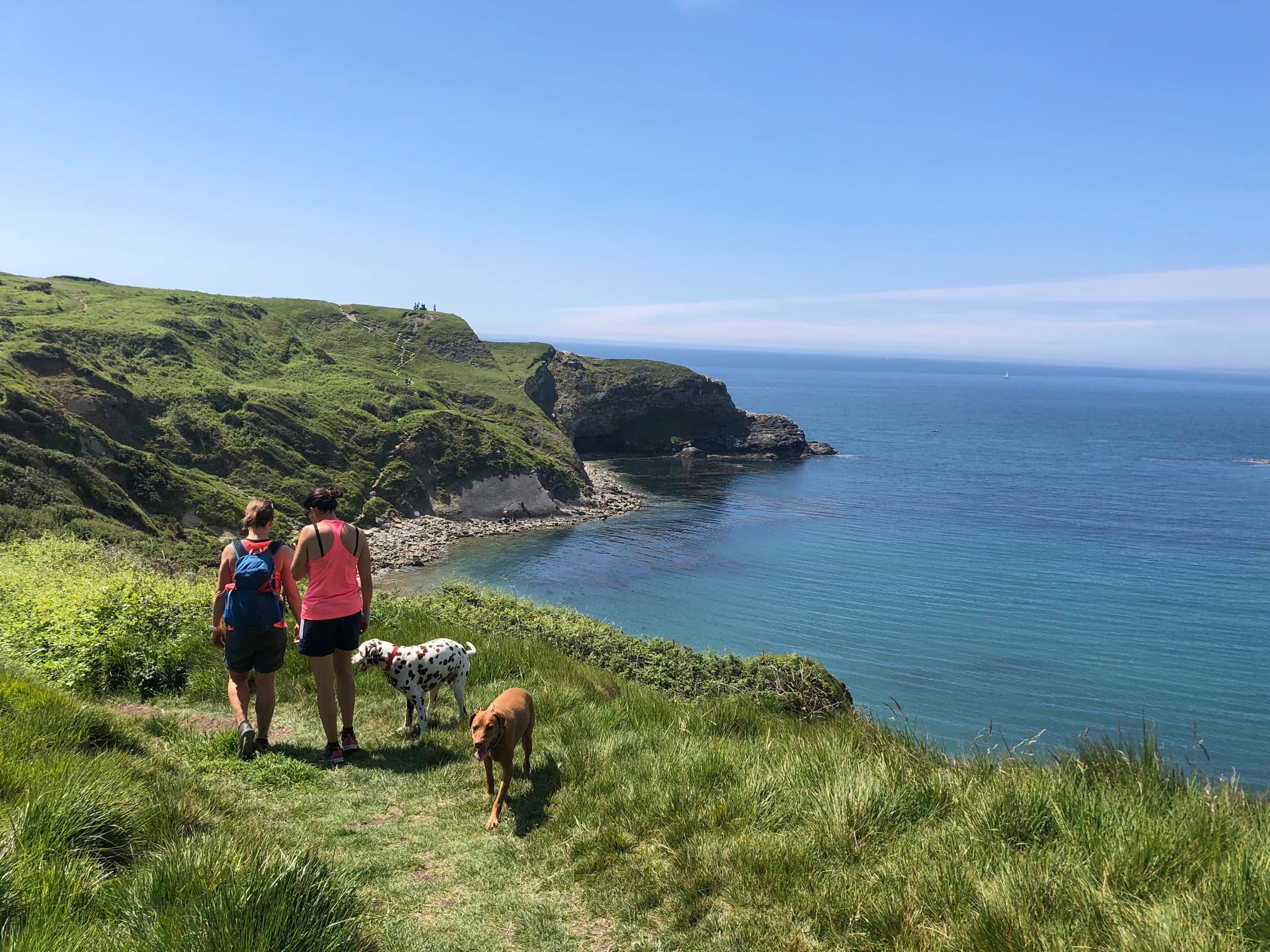
What was manual or limiting before
A great deal of the value walkers received arrived on paper. Printed guidebooks, manually prepared maps and route notes were assembled by hand for each trip, alongside admin that lived in people's heads and in documents rather than in a system.
That approach was dependable, but it was slow to produce, hard to scale, and difficult to update when a route, a place to stay or a piece of guidance changed. Growth meant more manual effort, not less.
- Printed guidebooks — Trip information prepared and posted on paper, costly to revise
- Manual maps & routes — Mapping and navigation assembled by hand for each booking
- Manual admin — Coordination and trip detail held in documents and individuals, not a shared system
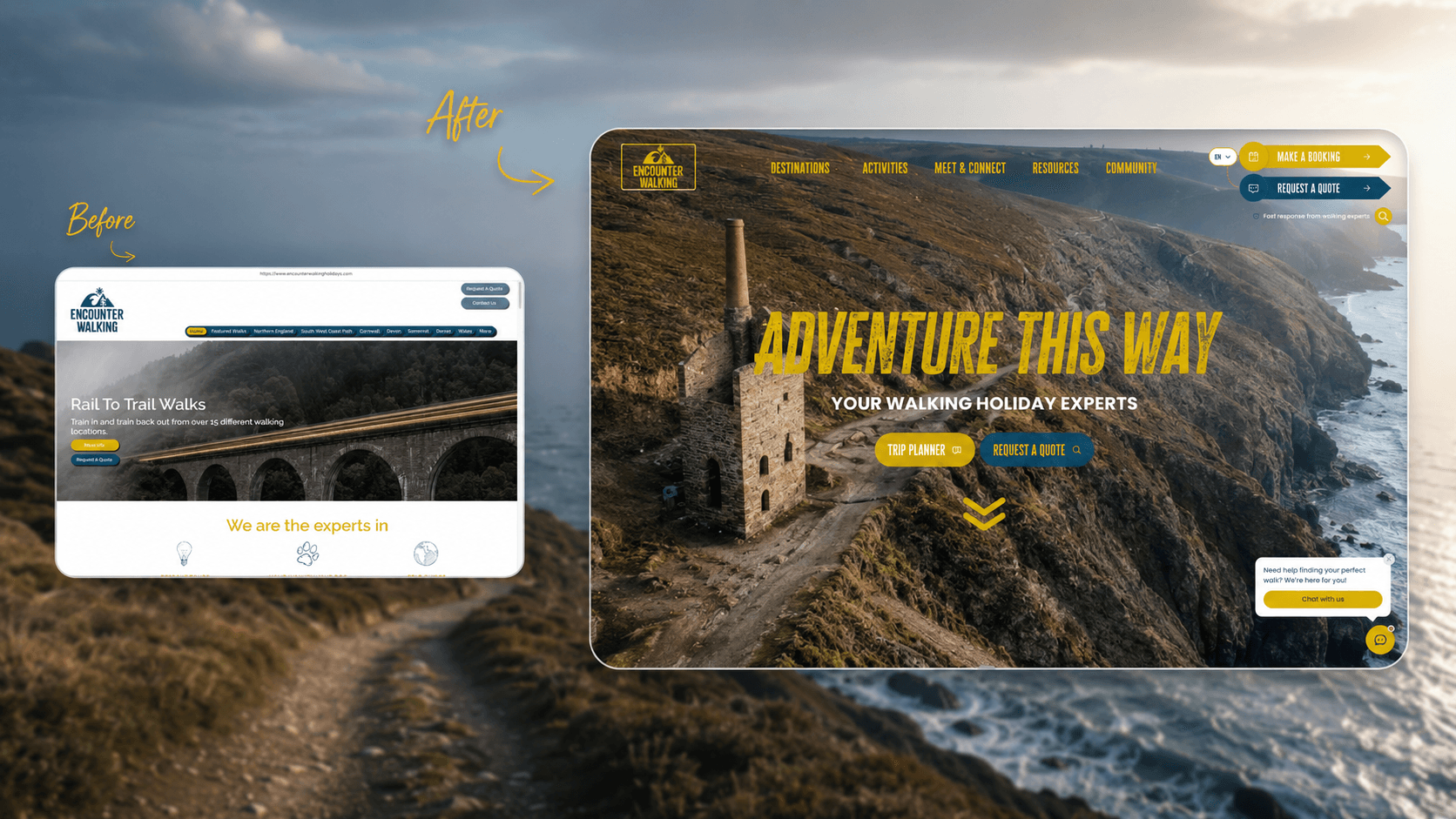
Why the business needed to modernise
New ownership brought ambition the existing way of working could not easily support. Walkers increasingly expect to plan, navigate and reference their trip on a phone, and the manual model made every improvement expensive in time.
Modernising was not about replacing the character of the business. It was about removing the manual drag so the team could spend its expertise on planning trips rather than re-producing the same materials by hand, and so the experience walkers received felt current.
Keep what made Encounter trusted. Modernise how it runs underneath.
What Veda AI realised during the project
The original brief was a website and an app. As we worked through how Encounter actually operated — how trips were built, how information flowed to walkers, and where the team's time went — it became clear the real need was broader than a front-end refresh.
The friction was operational, not just visual. Rebuilding the storefront alone would have left the manual processes behind it untouched. So the scope evolved deliberately, with the owners, as the genuine needs surfaced rather than being fixed in advance.
How the solution evolved
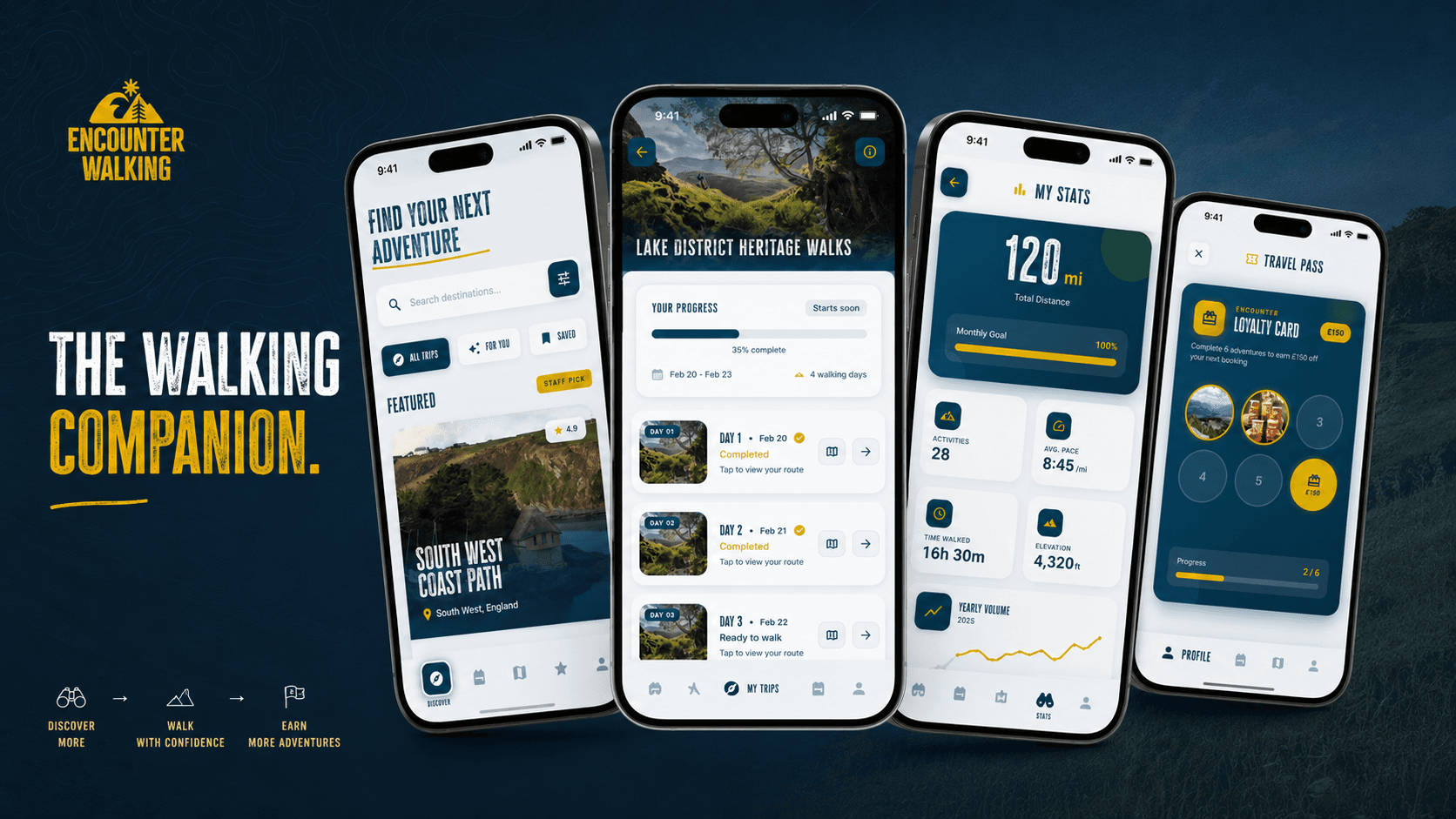
Rather than a redesign, the work became a modernisation of the operating model. We shaped a digital approach that connected the customer-facing journey to the way trips and information are managed internally, so that producing and updating a trip stopped being a manual, paper-first exercise.
Crucially, this was shaped as needs became clearer — building the right thing in the right order, instead of committing to a full specification before the business itself fully understood what it required.
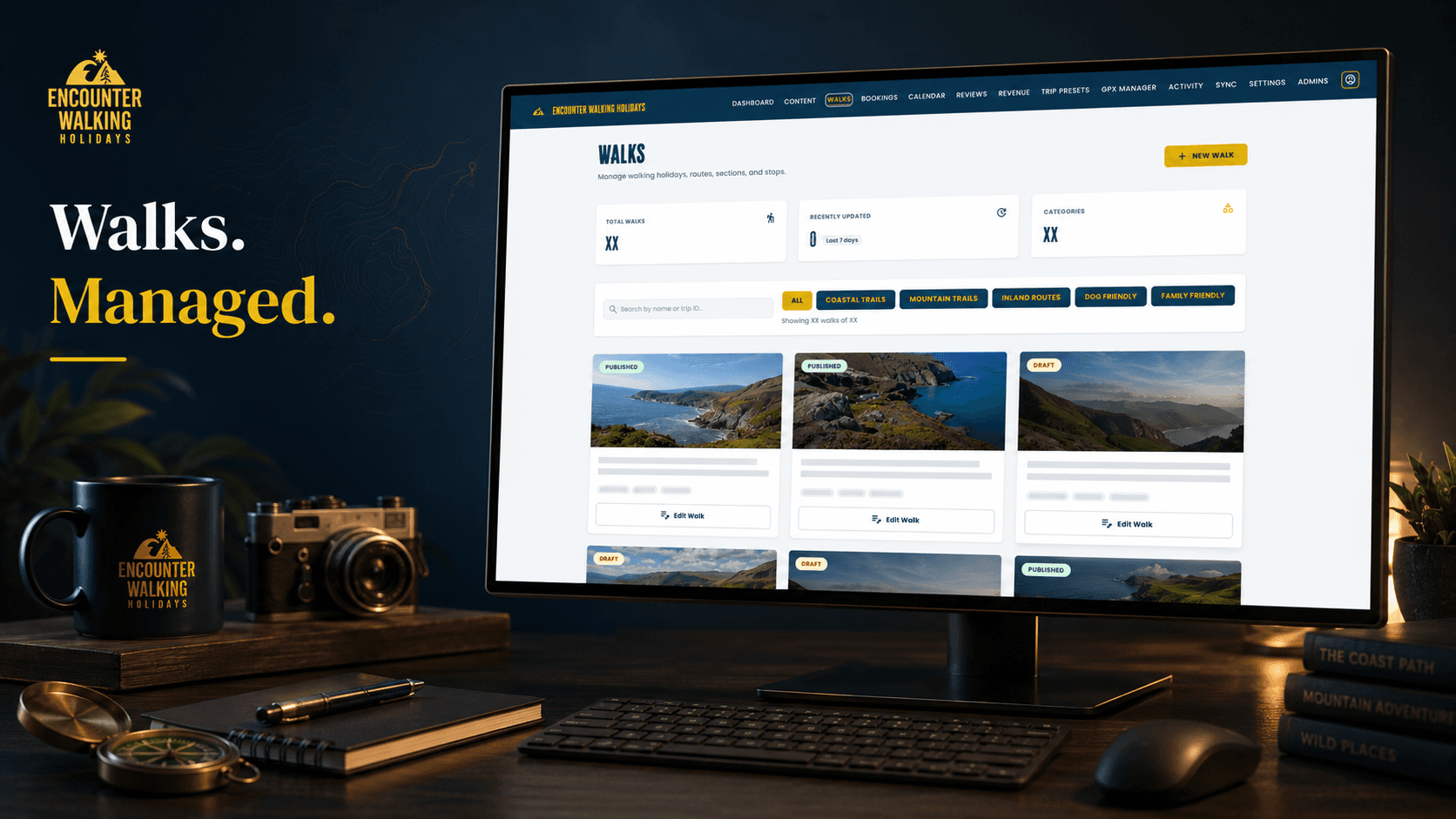
What changed for the internal team
The team gained a more structured way to manage trip information and the detail walkers depend on — designed to reduce the repetitive manual preparation that used to sit behind every booking.
With more of the operation held in a system rather than in documents and memory, the business became less dependent on any single person re-keying the same information, and better placed to grow without simply adding manual hours.
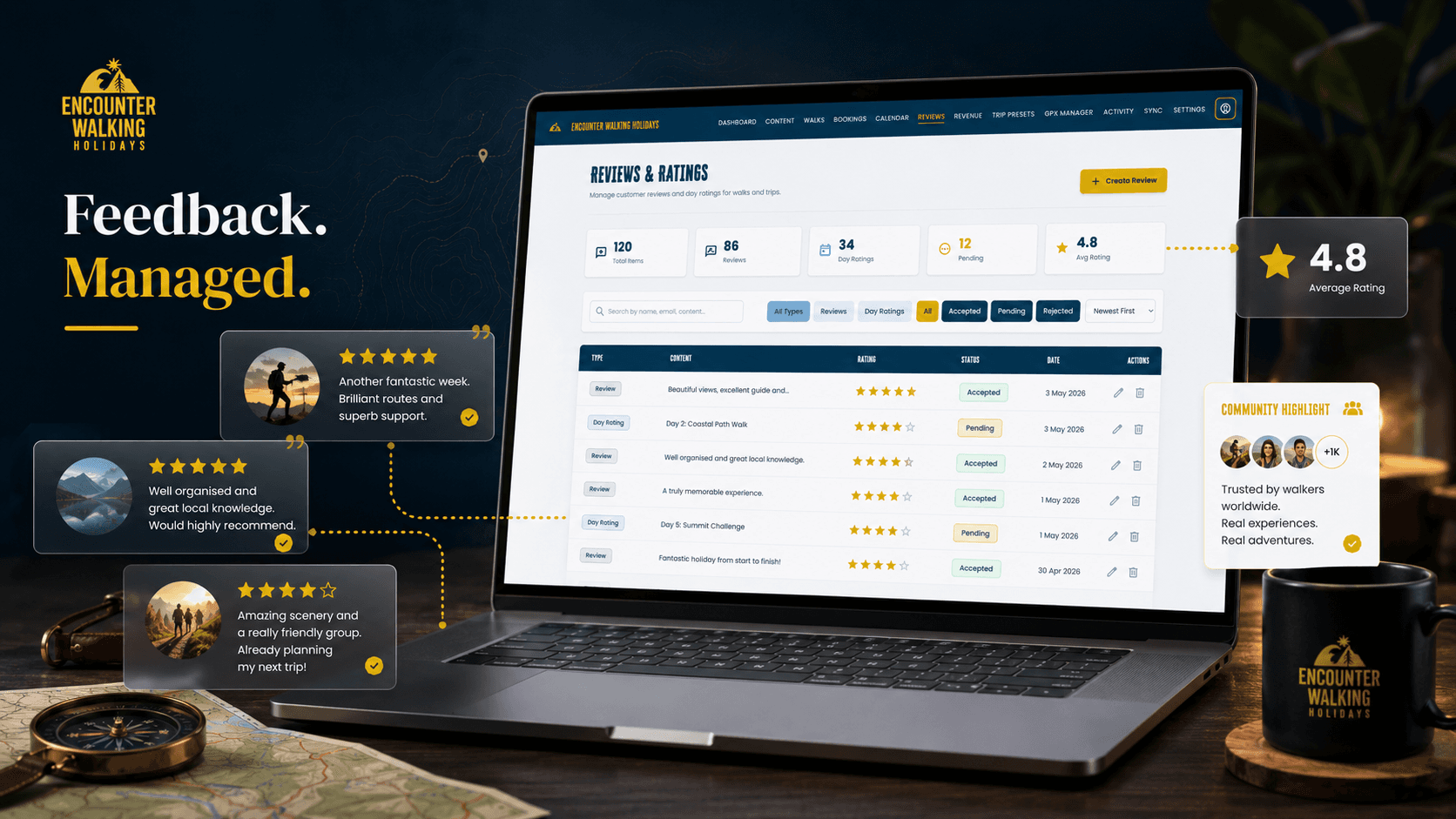
What changed for the walker
For the customer, the printed guide and hand-drawn map gave way to a clearer digital journey. Navigation and mapping — the practical heart of a self-guided walking holiday — became part of the digital experience rather than a paper add-on.
This is not a cosmetic detail: confident navigation is the difference between a walker enjoying a route and feeling stranded — and it is a large part of why people choose, trust and return to a self-guided walking-holidays operator.
What this case proves
Encounter shows how Veda AI modernises an established, manual business: understanding how it really works, then shaping and delivering the right operational solution as the needs become clearer — not forcing a fixed plan onto a business still discovering its own requirements.
It is proof that modernisation is more than an app build. The lasting change was operational — a more scalable digital model spanning the customer journey, the internal team and the wider system, with the character of the business kept intact.
What this proves Veda AI and Veda Software can do
Encounter is lead proof of operational modernisation: taking an established, hands-on business and moving it to a smarter, more scalable digital model, shaping the right solution as real needs emerge rather than over-specifying up front.
- Modernise a manual, paper-first business without losing what makes it trusted
- Let scope evolve responsibly as the genuine operational needs surface
- Connect the customer journey to internal operations, not just the front end
- Treat practical value — like navigation and mapping — as core business value

Modernising an established business?
If you have a business that works but runs on manual processes — and you want to move it to a smarter, more scalable digital model — let's talk about where transformation should start.