

How SportVision turned operational complexity into a clear technology roadmap
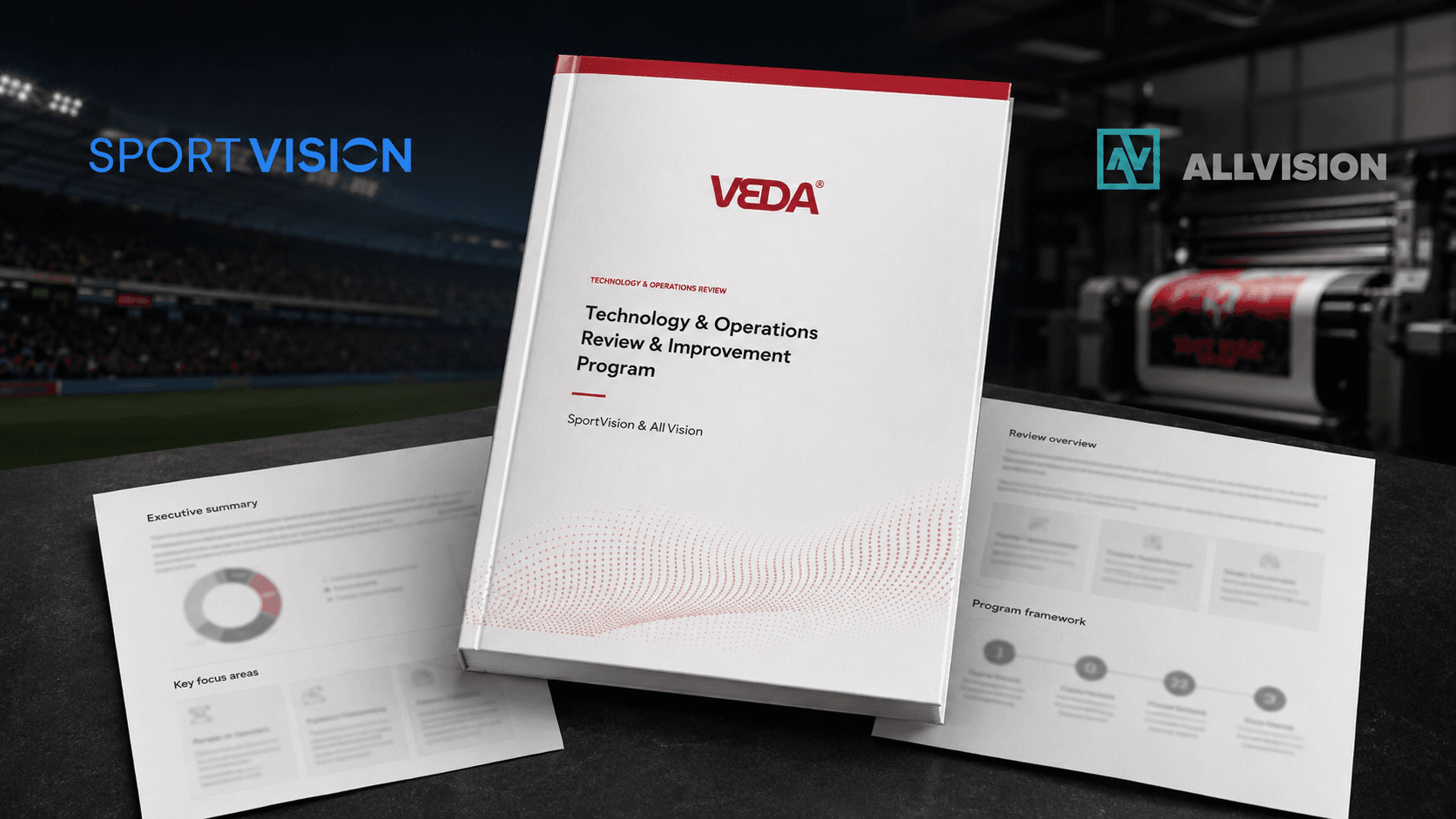
Veda AI reviewed the business across leadership, office, production, installation and finance, mapped the workflows and systems behind its operations, and produced a prioritised programme for stabilising, connecting and improving the organisation.
- Sector
- Print, signage & large-format
- Engagement
- On-site operational review & business-efficiency audit
- Focus
- Workflows across leadership, office, production and field
- What changed
- From felt-but-unclear friction to prioritised, roadmapped clarity
A business that had grown faster than its ways of working
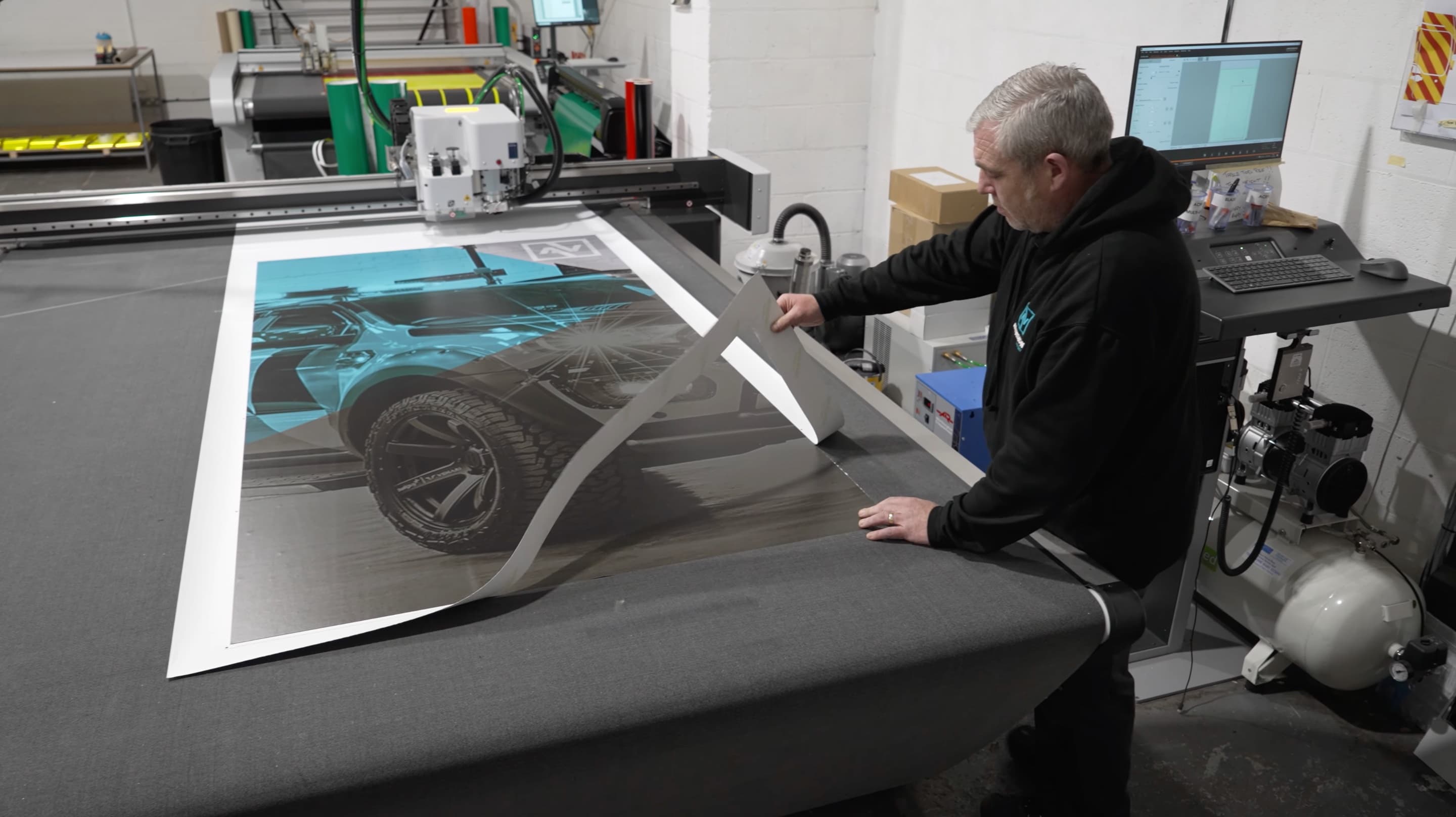
SportVision / AllVision had built a strong reputation across print, signage and large-format work. More clients and more jobs meant more moving parts, and the operation that had served a smaller business was now stretched across leadership, the office, the production floor and the field.
Growth like this rarely breaks anything outright. Instead it adds layers: extra steps, informal workarounds and one-off fixes that quietly become the norm. The leadership team could feel that things were harder than they should be, but the day-to-day pace left little room to step back and see why.
What was slowing the business down
Underneath the busyness sat a familiar pattern of operational noise. The same information was being entered and chased more than once, communication was scattered across people and channels, and no one had a single, reliable view of where a job actually stood.
The tools to do better were often already in place, but underused or worked around — so effort leaked out in small, repeated ways that were hard to spot from the inside.
- Duplicated work — The same details re-keyed and re-checked across roles and steps.
- Fragmented communication — Job information spread across people, messages and channels with no shared source.
- Weak visibility — No clear, shared picture of job status, priorities or where things were stuck.
- Underused systems — Existing tools relied on partially, with manual workarounds filling the gaps.
Why an outside perspective was needed
The leadership team already knew something was off — that is often the case in a growing business. What they did not have was the time, distance or framework to map it objectively and separate the real causes from the day-to-day symptoms.
An outside review brings a structured, unhurried look at how work actually flows, and the freedom to ask the questions an internal team is too close to ask. The aim was honest clarity, not a verdict: understand the business properly first, then decide what to change.
What Veda AI did during the review
Veda AI ran the audit on-site and hands-on, spending time with the people doing the work rather than reviewing it from a distance. Stakeholder interviews ran across leadership, office, production and field, so the review reflected the whole operation and not just one viewpoint.
From those conversations we mapped the real workflows end to end — how a job moves from enquiry through to delivery, where it hands off between people, and where it slows, repeats or loses information. That mapping made the friction visible and specific rather than a general sense of pressure.
- On-site, hands-on — Time spent alongside the team to see how work really happens.
- Stakeholder interviews — Voices from leadership, office, production and field roles.
- Workflow mapping — End-to-end job flow traced across functions to expose handoffs and gaps.

What the review uncovered
Once the workflows were mapped, the separate symptoms shared a single root cause: there was no reliable, shared view of where a job actually stood. The re-keying, the chasing and the late surprises all traced back to that one gap.
That reframing mattered: the priority was not more tools but a clearer, shared way for work and information to flow — so problems would surface early instead of late.
Every symptom traced back to one gap — no reliable, shared view of where a job actually stood.
What changed after the review
The audit turned a vague sense of friction into something the team could act on: a clear read of what was really happening, ordered by what mattered most. Instead of a long, undifferentiated list of problems, leadership had priorities.
Veda AI translated the findings into a practical systems-improvement roadmap — a sequenced path from manual, scattered ways of working toward clearer visibility and smarter systems, framed around business impact rather than technology for its own sake.
- Clarity — An honest, shared picture of how the business actually runs.
- Prioritisation — The biggest sources of lost time and margin identified and ranked.
- A roadmap — A sequenced plan to move from messy and manual toward structured and scalable.
What this case proves
This is the kind of work a Business Efficiency Audit is built for. Before any tooling or automation decision, it gives a growing business the outside clarity to understand where time and margin are leaking and what to fix first.
For owner-led businesses that can feel the friction but cannot quite name it, the value is simple: a grounded review, honest findings and a prioritised path forward — so the next investment is made with confidence, not guesswork.
Why this is the proof behind the Business Efficiency Audit
It shows the audit doing exactly what it promises: going in deeply, mapping how a business really works across every function, and converting felt friction into clear priorities and a roadmap — without fabricated outcomes or premature solutions.
- Diagnosis before solutions — understand the business properly, then decide what to change
- A structured, on-site review across leadership, office, production and field
- Operational noise made specific: duplicated work, fragmented comms, weak visibility, underused systems
- Findings turned into prioritised, roadmapped clarity an owner can act on


See where time and margin are leaking in your business
If you can feel the friction but cannot quite name it, a Business Efficiency Audit gives you an honest, outside read of how your operation really runs — and a prioritised plan for what to fix first.