


How Powerleague simplified print ordering across more than 40 locations
A clunky provider experience and manual internal handling had turned print ordering across a national estate into a steady source of operational friction. Veda AI reshaped the process so local sites could order for themselves and the central team stopped being the bottleneck.
- Sector
- Multi-site leisure / sport
- Engagement
- Workflow & process improvement
- Focus
- Print ordering & fulfilment across a national estate
- What changed
- From central bottleneck to decentralised, self-serve ordering
A national operation with a lot of moving parts
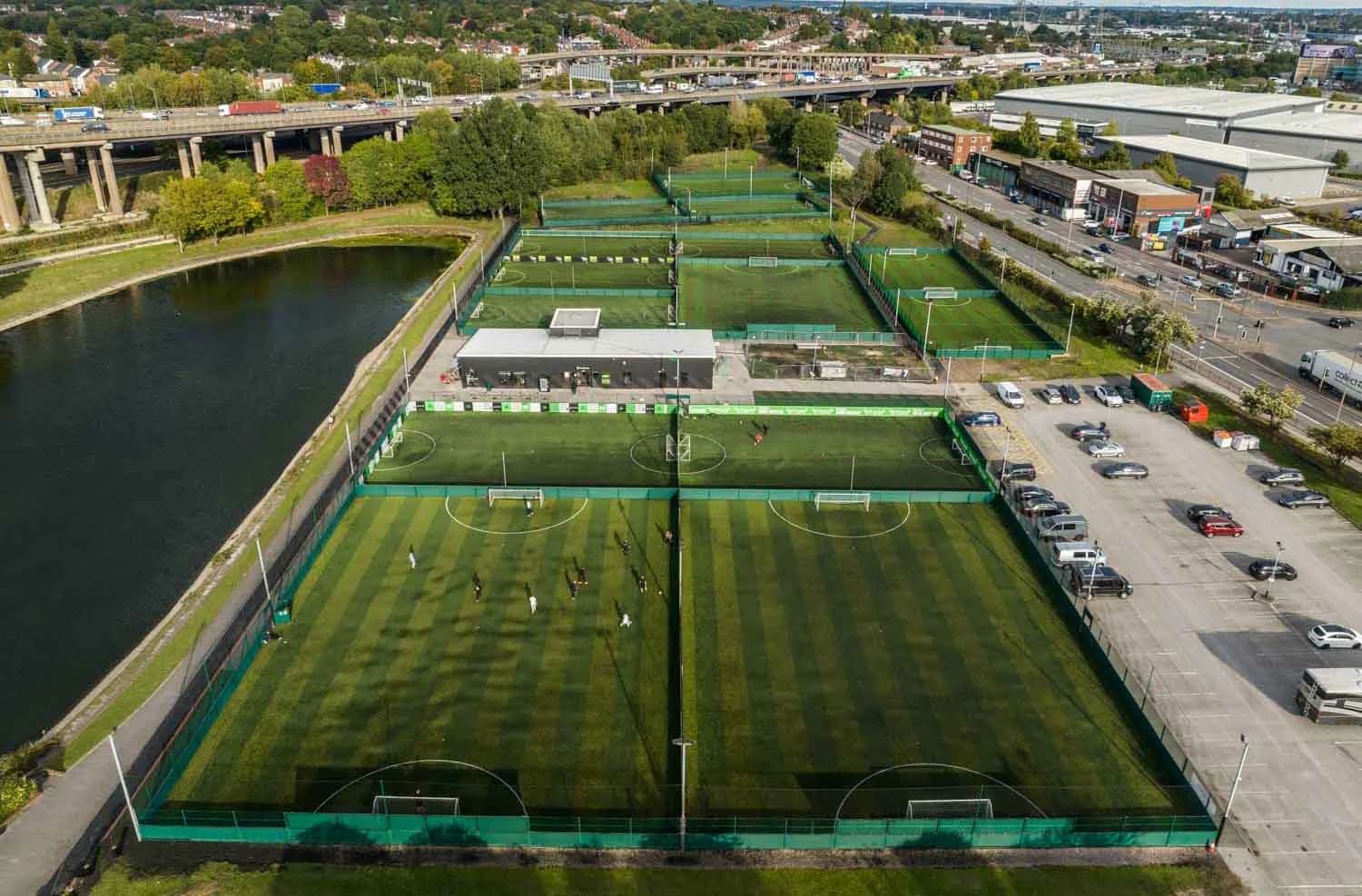
Powerleague runs sport and leisure across a national estate of sites. When you operate at that scale, the everyday processes that sit behind each location quietly add up — and small amounts of friction, repeated across every site, become a real operational cost.
Print ordering and fulfilment was one of those processes. It looked minor on paper, but it touched every location and leaned heavily on a central team to keep it moving.
What the process looked like before
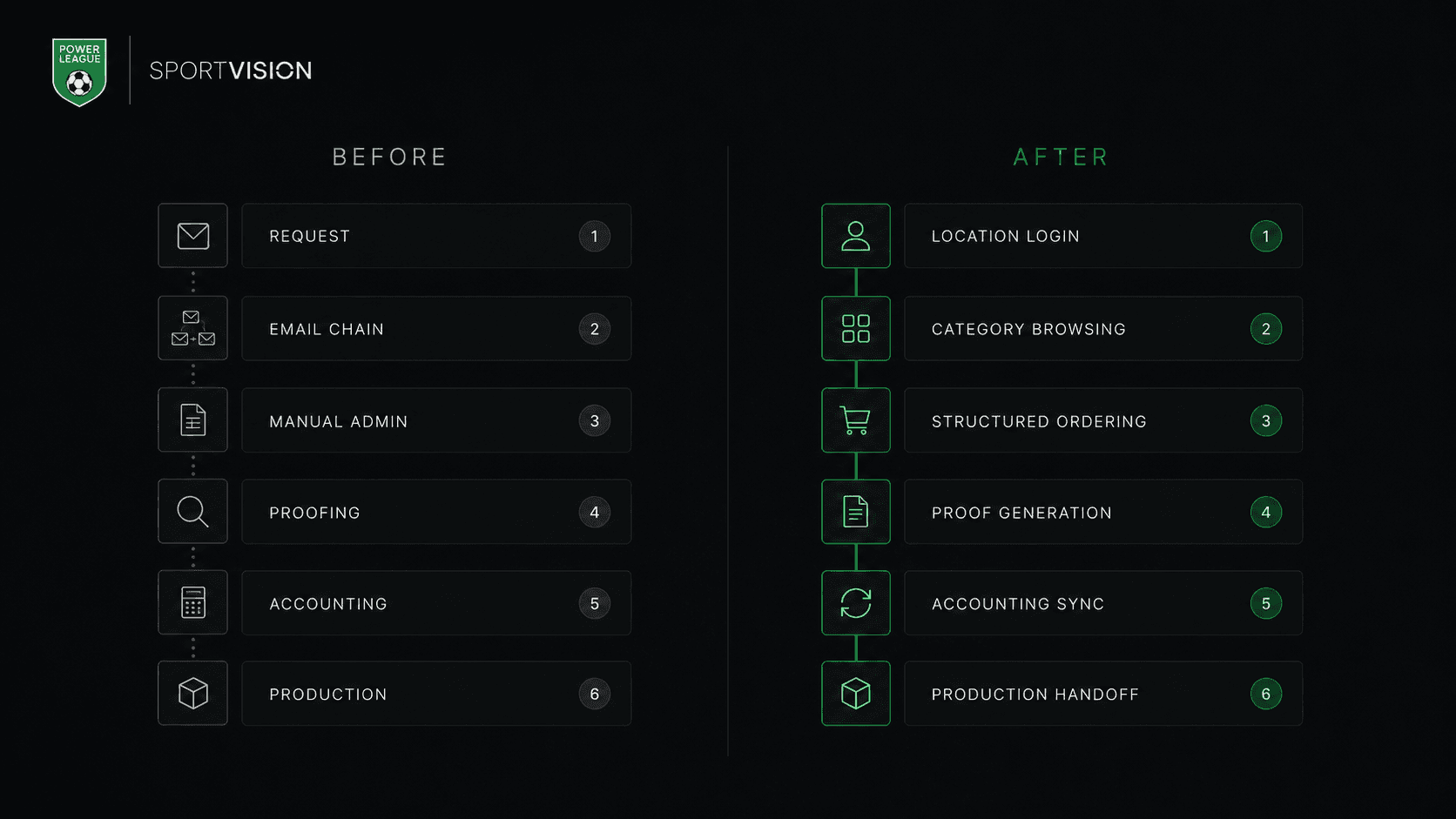
The starting point was a clunky provider experience that local sites struggled to use directly. Because of that, ordering tended to funnel back through the centre — orders were checked, reworked and chased by hand before anything reached fulfilment.
The result was a familiar pattern: a central bottleneck doing manual handling on behalf of dozens of sites, repetitive admin that recurred week after week, and a process that depended on people remembering steps rather than the system carrying them.
- Clunky provider experience — Hard for local sites to use on their own, so they leaned on the centre
- Central bottleneck — Orders routed through one team that handled, checked and chased them manually
- Repetitive manual handling — The same admin steps, repeated for every site, every cycle
Why the old way held things back
A process that depends on a central team to hold it together does not scale cleanly. Every new site, every busy period and every change adds load to the same handful of people, and the admin only grows.
It also slowed local sites down. They could not act with autonomy on something as routine as a print order — they had to wait on the centre. That is the kind of operational drag that rarely shows up in a single number but is felt across the week, on both sides of the handoff.
What Veda AI changed
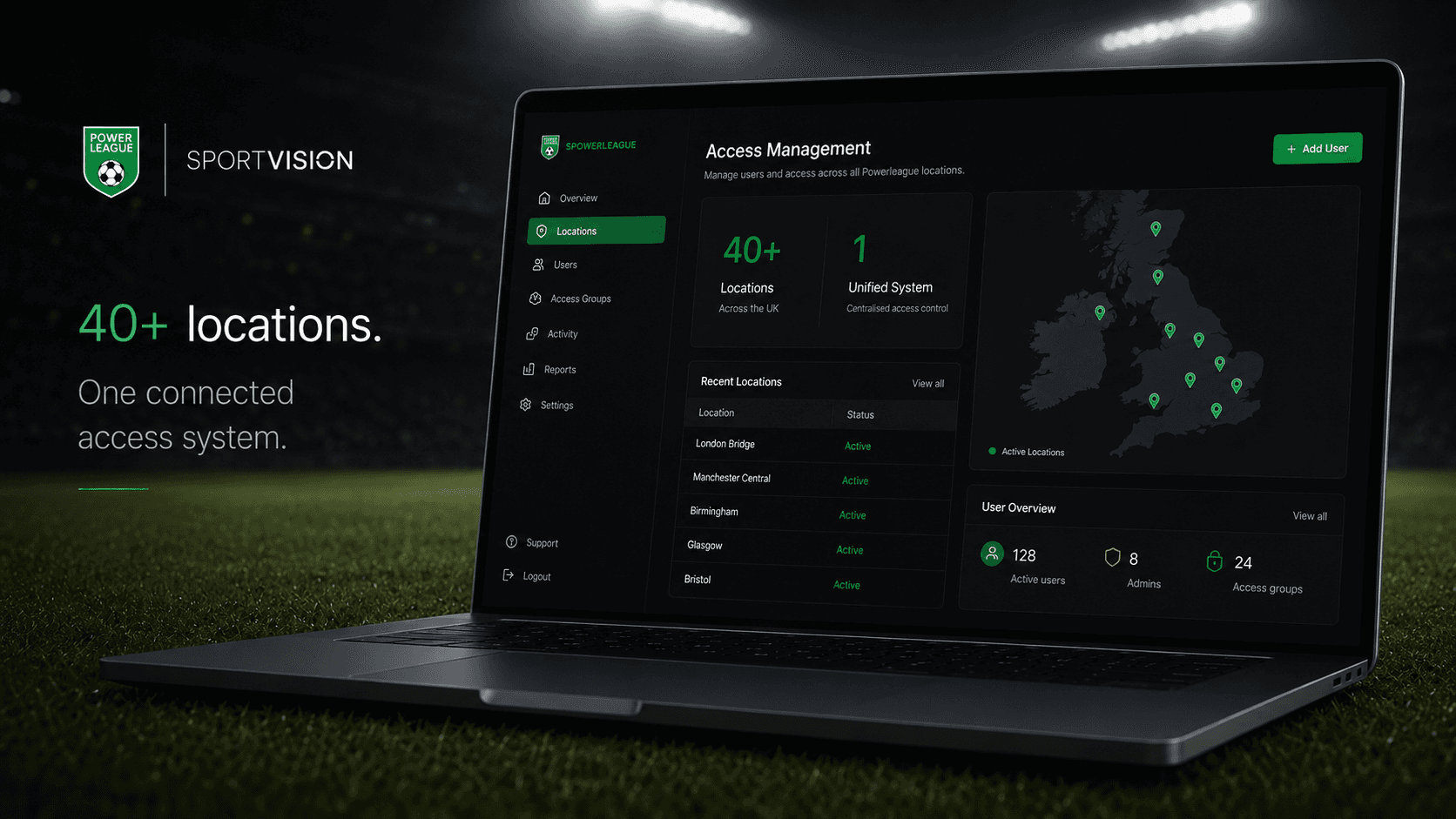
Rather than treat this as a software brief, Veda AI looked at the workflow first: where ordering started, where it stalled, and why so much of it had to pass through the middle. The fix was to decentralise the process so local sites could order directly, cleanly and without the central rework step.
With ordering pushed out to the sites and the flow through to fulfilment tidied up, the central team moved from doing the work by hand to overseeing a process that largely ran itself.
- Decentralised ordering — Local sites order directly instead of routing everything through the centre
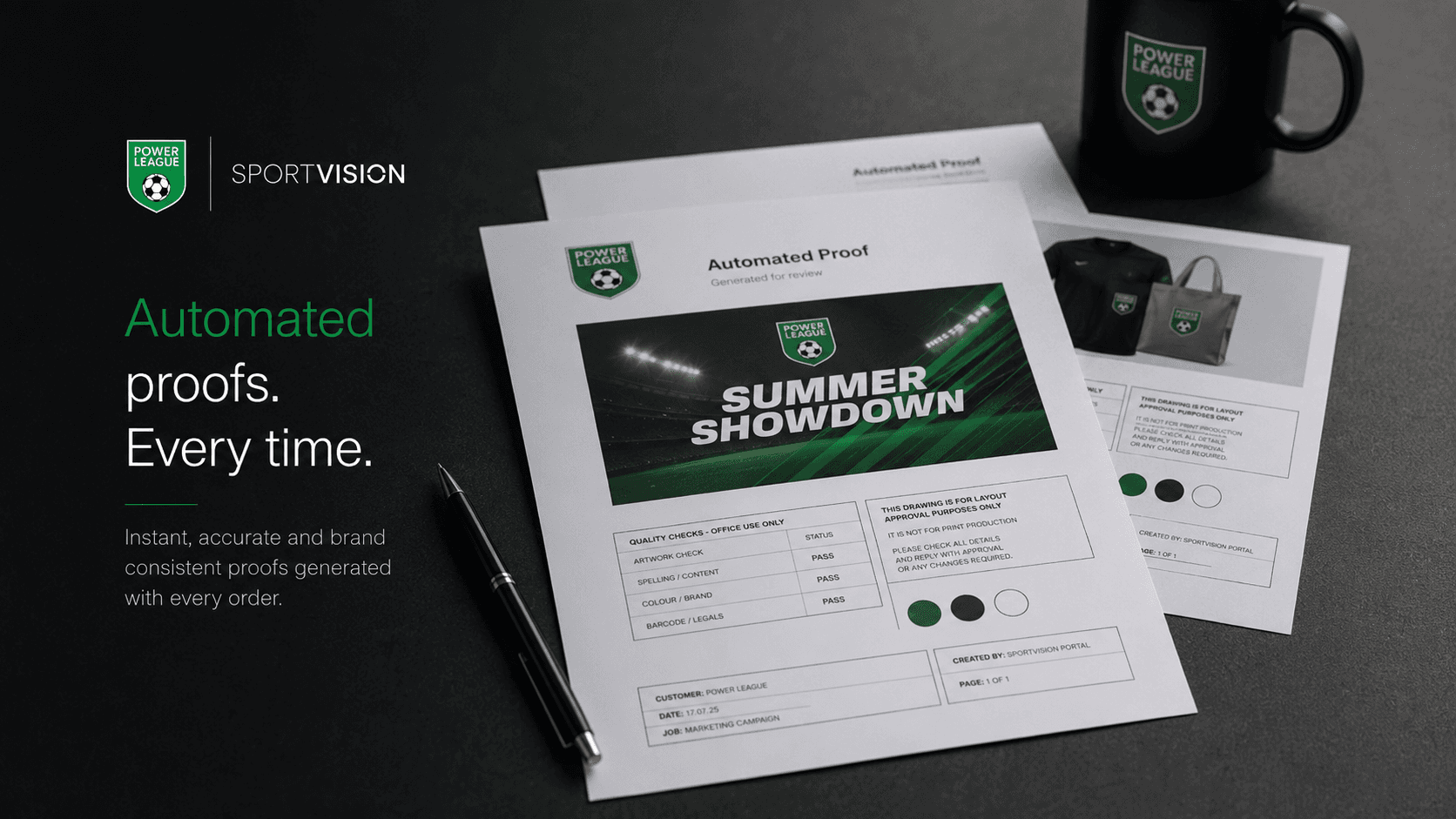
- Cleaner end-to-end flow — Fewer manual checks and rework steps between order and fulfilment
- Less reliance on central admin — The centre oversees rather than processes every order by hand
Local sites order for themselves. The centre oversees a process that largely runs itself.
What became easier for the sites
For local sites, the day-to-day got simpler and faster. Instead of waiting on a central queue, a site can place and manage an order the moment it is needed — no back-and-forth, and nothing waiting on someone else to action it.
That autonomy matters at scale. When each site can handle its own ordering confidently, the whole estate moves more smoothly without anyone having to coordinate it centrally.
What became easier internally
The central team felt the difference most. With sites self-serving, a large slice of repetitive, manual order handling simply left the central workload rather than being spread thinner across the team.
Their role shifted from processing to oversight: a cleaner, more scalable position where the system carries the routine flow and people focus on the cases that genuinely need attention.
- Less manual handling — Fewer orders checked, reworked and chased by hand
- Reduced admin drag — Repetitive order-handling admin taken out of the centre — the reduction has not been separately measured
- A more scalable shape — The process holds up as the estate grows, without growing the central team
What this case proves
This is a clear example of Veda AI taking a clunky, admin-heavy workflow and turning it into a cleaner, more scalable operational system. The win was not a feature list — it was a better-shaped process: ordering decentralised, the central bottleneck removed, and manual handling cut on both sides.
It is the same approach we bring to any process that has quietly become a drag: understand how the work actually flows, find where time and effort are being lost, and rework it into something simpler, more autonomous and built to scale.
What this proves Veda AI can do
Powerleague shows how Veda AI takes a repetitive, central-heavy workflow and reshapes it into a cleaner system — giving local teams autonomy, removing the bottleneck in the middle, and cutting manual handling without adding headcount.
- Diagnose where a process has quietly become an admin drag, then redesign the flow around it
- Decentralise routine work so local teams act with autonomy instead of waiting on the centre
- Remove central bottlenecks and reduce manual, repetitive handling
- Leave behind a process that scales with the operation rather than against it




Have a workflow that has quietly become a bottleneck?
If a routine process is soaking up central admin and slowing your sites or teams down, we can help you reshape it into something cleaner and more scalable. A Business Efficiency Audit is the simplest place to start.