Who keeps business improvement moving when you're busy running the business?
How a technology partner can help busy owners investigate opportunities, choose priorities and carry agreed changes forward.
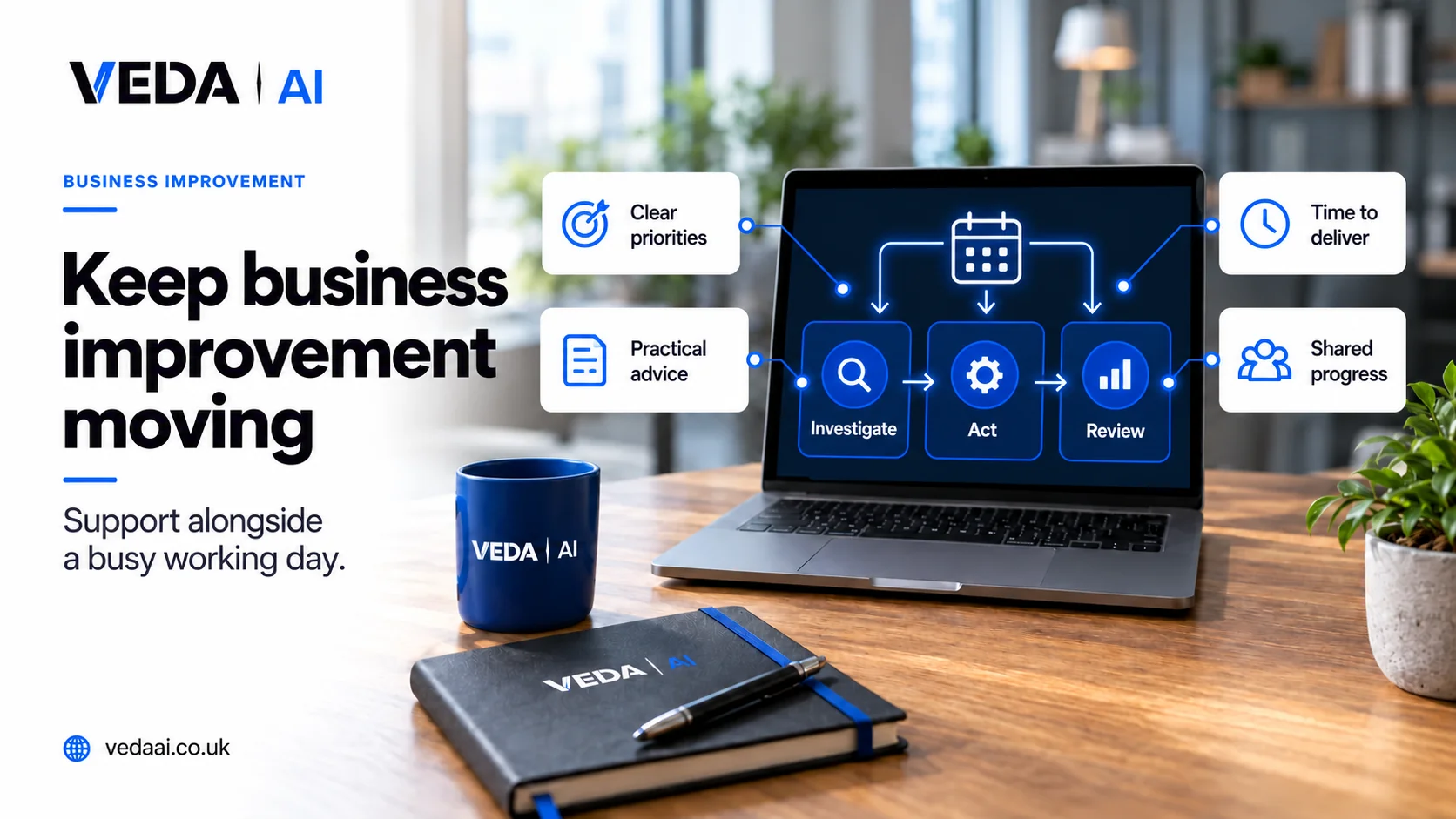
You already know there are things the business could do better. A report takes too long to prepare. The team keeps asking for the same information. There is a growing list of AI and automation ideas that nobody has properly investigated.
The difficulty is finding the attention to move them forward. Customers, staff and daily decisions take priority. Improvement work waits for a quieter week that rarely arrives.
An ongoing technology partnership can help give that work a regular place in the business: someone to investigate the opportunities, help choose priorities and carry agreed changes through to use.
Good ideas need more than agreement
A management meeting can produce a sensible list of improvements without producing much progress.
Each idea still needs investigation. Someone must speak to staff, understand the systems, assess the options and explain the effort involved. Then the business needs to make a decision and arrange delivery.
When that responsibility sits alongside an already full operational role, even useful work can stall. The owner remains the person expected to research tools, brief suppliers and chase the next step.
A partnership is worth considering when there is enough continuing need to justify dedicated external attention and a clear route for your team to make the decisions that matter.
Bring an opportunity that needs investigating
You do not need to arrive with a detailed technical specification. A clear description of what is difficult can be a stronger starting point.
For example, an illustrative business might say: “Preparing the weekly management figures takes most of a day, and we still spend the meeting checking whether they are right.”
A technology partner can work with the people involved to understand where the figures come from, why reconciliation is needed and which decisions the report should support.
That turns a general frustration into a more useful discussion about options. The next step might involve consistent data entry, an integration, a revised report or a combination of changes.
Give competing priorities a shared view
Different departments will see different opportunities. Finance may want clearer reporting while operations needs scheduling improved and sales wants a better enquiry process.
The partner can help compare those needs using evidence about frequency, effort, risk and the business result. Leadership can then make a choice with a clearer understanding of the trade-offs.
A shared roadmap records the direction and what comes next. It should distinguish agreed work from ideas still being explored, and show dependencies that affect the sequence.
That means the business has somewhere to return to when a new request arrives. It can decide whether the request is important enough to change the plan.
Turn the priority into a manageable next step
Large ambitions become easier to act on when the next piece of work is clear.
“Use AI across the business” offers little guidance. Testing whether an approved AI tool helps staff prepare a particular type of document creates a task people can understand and review.
Similarly, “improve visibility” might begin with making one critical job status available without staff needing to ask three colleagues.
The partner can explain what needs doing, what contribution is required from your team and how the result will be checked. This reduces the amount of organising the owner has to do while keeping the decision connected to the business goal.
Maintain a regular connection between decisions and delivery
A continuing relationship gives improvement work a recurring point of attention. Progress can be reviewed, obstacles raised and the next priorities agreed while the team retains the context from earlier work.
Veda AI's monthly partnership connects reserved delivery capacity with regular review. That creates a structure for keeping the work visible alongside day-to-day demands.
The review should help resolve questions rather than create another layer of reporting. What has moved forward? What needs the business's input? Has anything changed that affects the priority?
Where work cannot proceed, the reason should be clear enough for someone to act on it.
Keep your team involved where their judgement matters
External help can reduce the burden of investigating and organising improvements. It still needs the knowledge and decisions that sit inside your business.
Someone needs to explain operational rules, involve staff and decide what changes are acceptable. A partner cannot determine your commercial priorities or create time in a manager's diary without agreement.
Name an internal contact with authority to coordinate those contributions. Set aside realistic time for questions, testing and feedback, so the external capacity can be used productively.
The objective is a workable division of responsibility: your leadership sets direction, while the partner contributes the investigation, recommendations and delivery needed to make progress.
Judge the relationship by the progress it enables
A useful partnership should leave fewer worthwhile ideas permanently waiting for someone to pick them up. You should be able to see which problems have been investigated, what changes are in use and what has improved.
Some ideas will turn out to be poor investments. Deciding not to pursue them can be a useful result when the reasoning is clear.
Over time, review whether the arrangement gives the business enough momentum to justify the commitment. That is a better test than the length of the task list.
If improvement work keeps returning to your desk without moving forward, explore Veda AI's partnership options. Bring the priorities that keep being deferred and the constraints that have held them back.
Related insights.

Business Efficiency
Technology retainer vs one-off project: which is right for your business?
Compare a defined project with an ongoing partnership and understand when continuity, monthly capacity and connected priorities can help your business.
5 min read · 19 October 2026

Business Efficiency
Software development agency or technology partner: what changes with an ongoing partnership?
Explore how an ongoing technology partnership connects practical advice, implementation and follow-through across changing business priorities.
5 min read · 19 October 2026

Business Efficiency
How to choose a technology partner for your business
The questions and evidence that help business owners choose a partner who can understand the operation and keep useful improvements moving.
5 min read · 19 October 2026
Get Veda AI Edge.
Practical briefings on AI adoption, automation, intelligent products and business improvement — what changed, why it matters and what to consider next. No hype, no AI theatre.
By joining you agree to receive Veda AI Edge from Veda AI. Unsubscribe any time.
Ready to find what’s worth fixing?
Turn the idea into steady improvement.
Work alongside a team that helps you prioritise and deliver AI, automation and software changes each month. Explore the Business Improvement Partnership or discuss the business on a free call.