Software development agency or technology partner: what changes with an ongoing partnership?
Explore how an ongoing technology partnership connects practical advice, implementation and follow-through across changing business priorities.
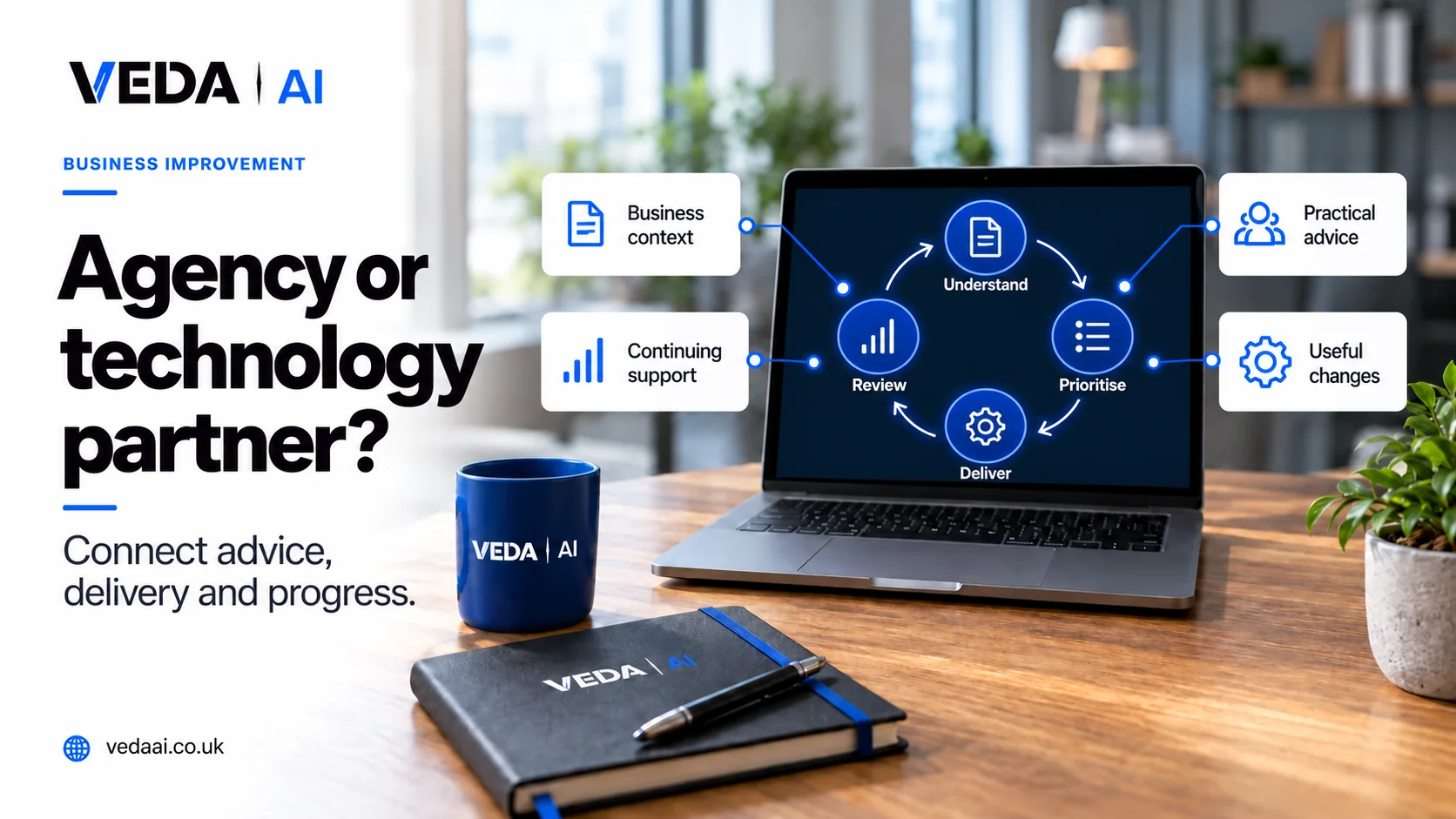
You might first look for technology help because one thing is causing trouble. The team is spending too long preparing quotes, customer information is scattered, or someone keeps suggesting the business should be doing more with AI.
But when you look closer, the issue rarely sits neatly inside one software brief. It involves how people work, the systems they use and decisions nobody has had time to investigate.
That is where the difference between commissioning development and working with an ongoing technology partner becomes useful. The relationship can help you decide what deserves attention, act on it and keep improving as the business changes.
Start with the business problem
A software development agency can be an excellent choice when you have a defined requirement: a customer portal, an application or an integration that needs building. Many agencies also offer strong discovery and advisory work.
A consultant can help you understand a problem, assess options or make an important investment decision. If you have the people to implement the recommendations, a focused advisory engagement may meet the need.
An ongoing partnership is worth considering when the business needs help across both decisions and delivery over time. You have several connected opportunities, limited internal capacity to progress them and a need for someone to understand the wider picture.
Advice can lead directly into useful work
Consider an illustrative service business that wants an AI tool to answer customer enquiries. Before choosing a tool, someone needs to understand why those enquiries take so long to handle.
The investigation might show that staff spend most of their time searching for job updates. Connecting existing systems and making those updates accessible could address the immediate problem. AI might help with particular tasks later, once the information is reliable.
A partnership can connect that reasoning with implementation. The team contributing to the decision remains involved as the change is made, tested and introduced. There is less need to translate an advisory report into a separate brief before useful work can begin.
The mix of work can follow the need
A business may need help reviewing a process one month, connecting systems the next and helping staff use an approved AI tool after that.
With a suitably structured partnership, those activities can sit within a shared improvement agenda. The plan can evolve without the business having to treat every small decision as a new procurement exercise.
That flexibility needs discipline. Agree the priorities, what the available capacity can cover and what will wait. A continuing relationship works best when the business can explain why the next piece of work matters.
Veda AI's Business Improvement Partnership reserves monthly capacity across consulting, AI and development, with the mix shaped around your needs.
Understanding can build from month to month
Every external team needs time to learn how your business works. They need to understand the systems, the exceptions, the people involved and the reasons earlier decisions were made.
Continuity gives that knowledge somewhere to accumulate. A later improvement can draw on what was learned during earlier work, including what staff found difficult and which dependencies affected delivery.
For example, improving enquiry handling may reveal that inconsistent customer records are also affecting reporting. A team already familiar with those records is better placed to investigate the connection than one receiving an isolated request for a dashboard.
This makes continuity useful beyond simple convenience: it can help individual changes form a more coherent direction.
Delivery is followed by review and adoption
A working feature is one part of an improvement. People need to use it, exceptions need resolving and the business needs to judge whether it helped.
An ongoing relationship creates an opportunity to return to those questions. If a revised workflow reduces one kind of administration but creates another, the next review can address that before the team moves too far ahead.
Staff development matters too. Helping people recognise appropriate AI use, check outputs and build useful working habits may create value alongside technical changes.
The practical benefit is a continuing conversation about the result, informed by what happens when people use the improvement in their normal work.
You retain a clear voice in the priorities
A technology partner should help you make better decisions and carry agreed work forward. Your leadership still decides which outcomes matter and what disruption the organisation can absorb.
Name someone internally who can resolve questions and involve the right colleagues. Ask the partner to bring options, explain trade-offs and identify what needs your decision.
This can make technology less of a collection of disconnected supplier requests. You have a regular place to discuss what is worth doing, a team to progress it and a record of what has changed.
It also makes it easier to stop work that no longer deserves the investment.
Decide whether the relationship fits your situation
If you have one well-defined build and the internal ability to manage it, a project may be the most appropriate route. If you need an independent view on a single decision, a consultant may be enough.
If the challenge is maintaining progress across a changing list of business improvements, an ongoing partnership deserves a closer look. Its value depends on the work you can usefully achieve together and the attention both sides can give it.
At Veda AI, that is the conversation we want the partnership to support. Explore the monthly options and consider where continuing advice, practical delivery and follow-through could help your business.
Related insights.
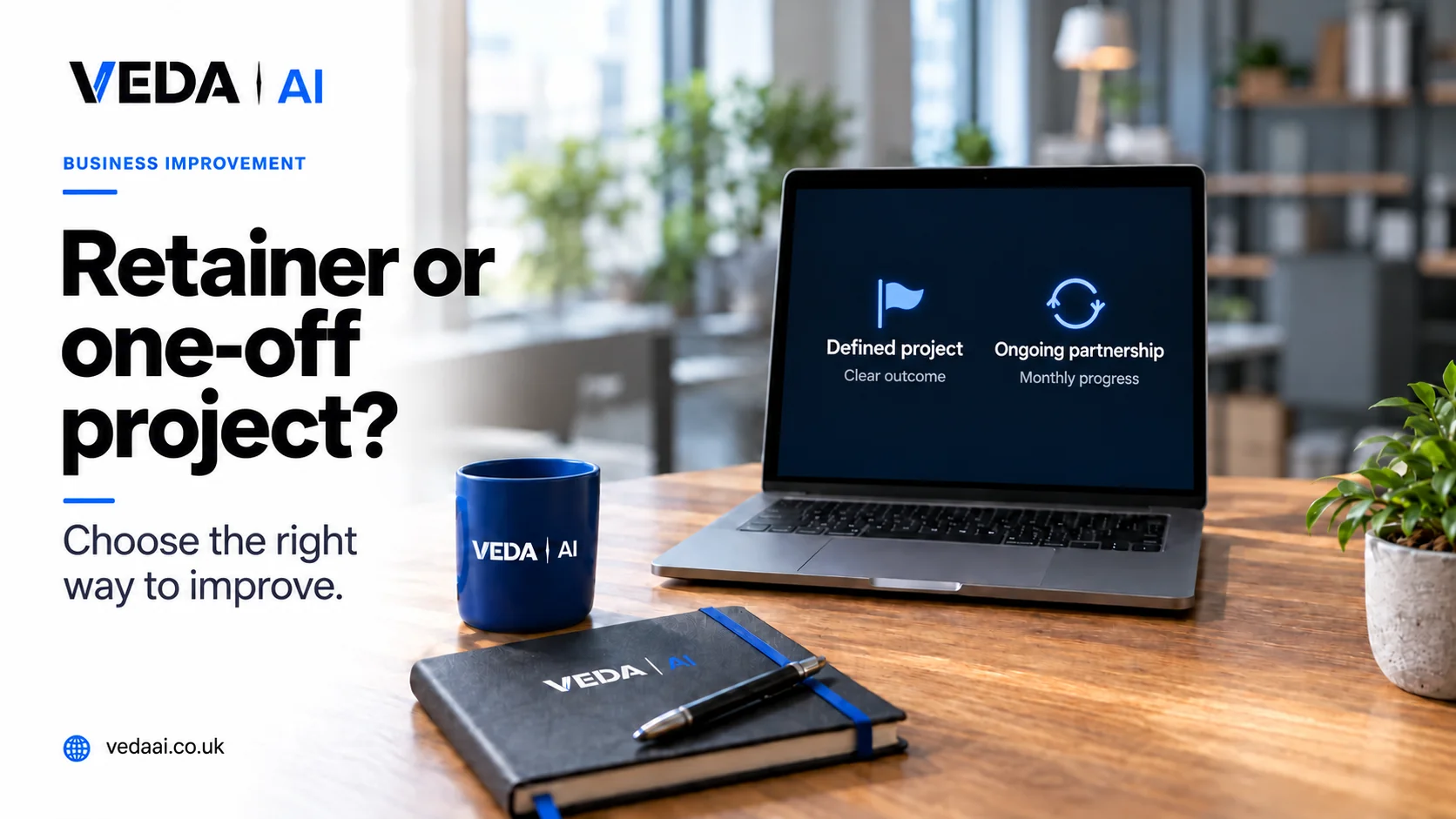
Business Efficiency
Technology retainer vs one-off project: which is right for your business?
Compare a defined project with an ongoing partnership and understand when continuity, monthly capacity and connected priorities can help your business.
5 min read · 19 October 2026
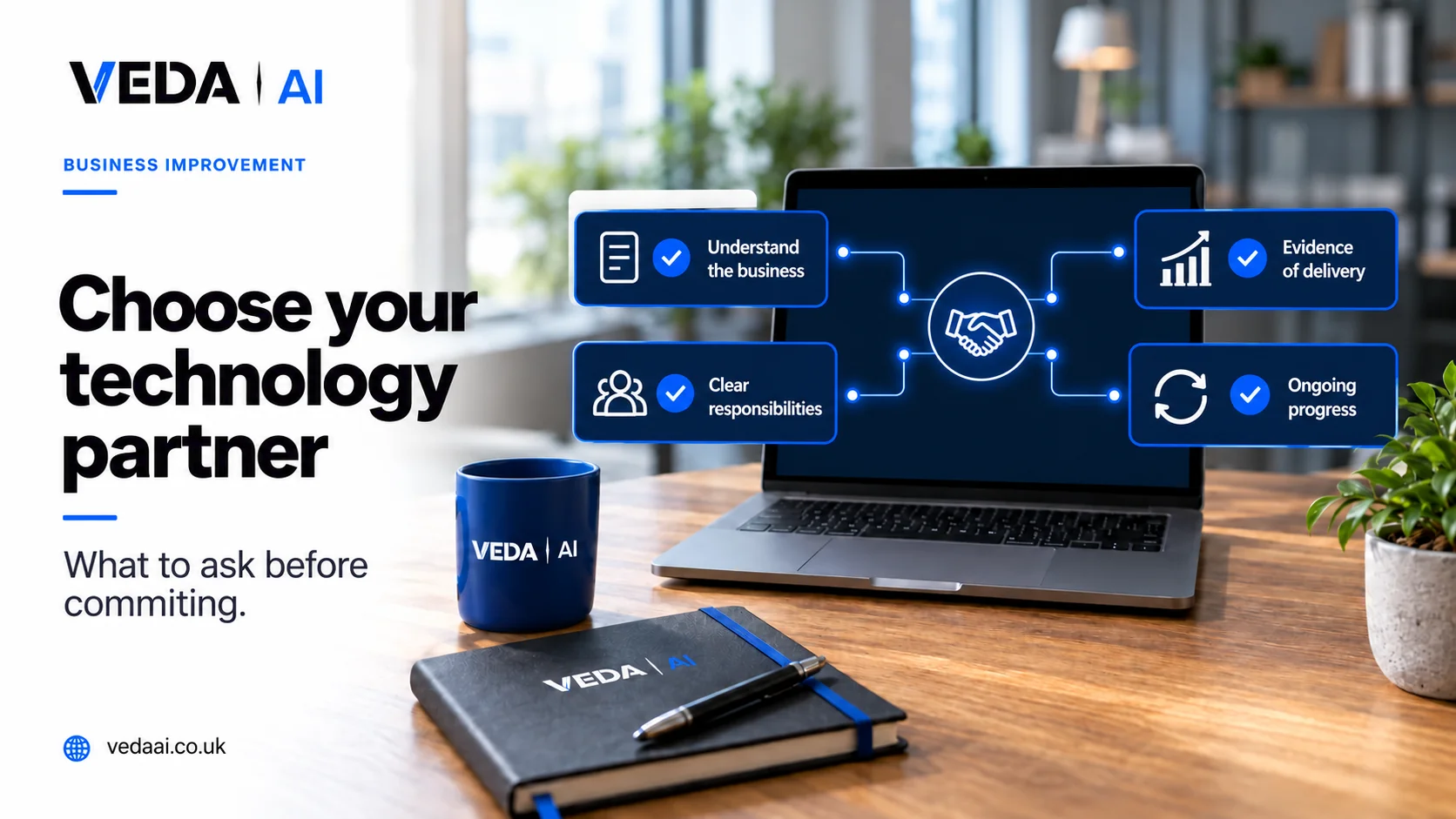
Business Efficiency
How to choose a technology partner for your business
The questions and evidence that help business owners choose a partner who can understand the operation and keep useful improvements moving.
5 min read · 19 October 2026
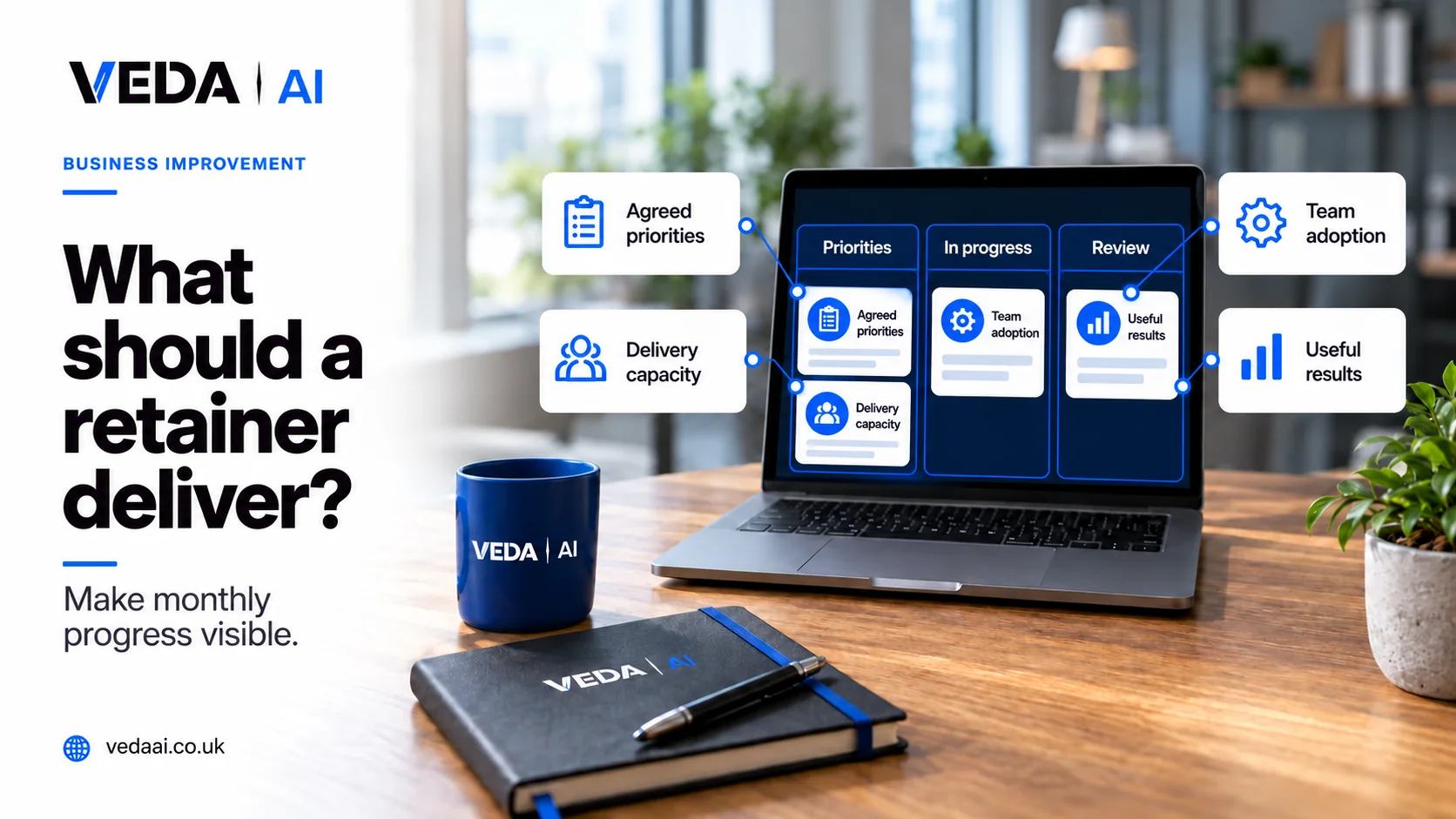
Business Efficiency
What should you actually get from a monthly technology retainer?
What to expect from monthly priorities, delivery, adoption and review, with Veda AI’s Foundation, Growth and Leader options explained.
5 min read · 19 October 2026
Get Veda AI Edge.
Practical briefings on AI adoption, automation, intelligent products and business improvement — what changed, why it matters and what to consider next. No hype, no AI theatre.
By joining you agree to receive Veda AI Edge from Veda AI. Unsubscribe any time.
Ready to find what’s worth fixing?
Turn the idea into steady improvement.
Work alongside a team that helps you prioritise and deliver AI, automation and software changes each month. Explore the Business Improvement Partnership or discuss the business on a free call.